Find the best AI fleet maintenance software for small business to cut downtime, lower fuel costs, and simplify admin work for growing fleets.
AI fleet maintenance software helps small fleets avoid breakdowns and cut fuel costs. Industry studies show fleets can significantly cut unplanned repairs and fuel waste with predictive alerts and telematics. WiDrive uses similar predictive fleet maintenance and telematics tools to support these kinds of outcomes.
Even fleets with 5 to 50 vehicles can replace spreadsheets with simple dashboards, auto work orders, and service reminders. That means fewer surprises and more time on the road.
Keep reading to find the best option for your fleet.
Why AI fleet maintenance matters for small fleets
- AI fleet maintenance software can reduce unplanned repairs by up to 30 percent with predictive alerts and live tracking.
- Small fleets often pay 5 to 20 dollars per vehicle each month, which fuel savings can offset.
- You can start with tracking or maintenance tools and add more features as your fleet grows.
What is AI fleet maintenance software and why it matters for small businesses
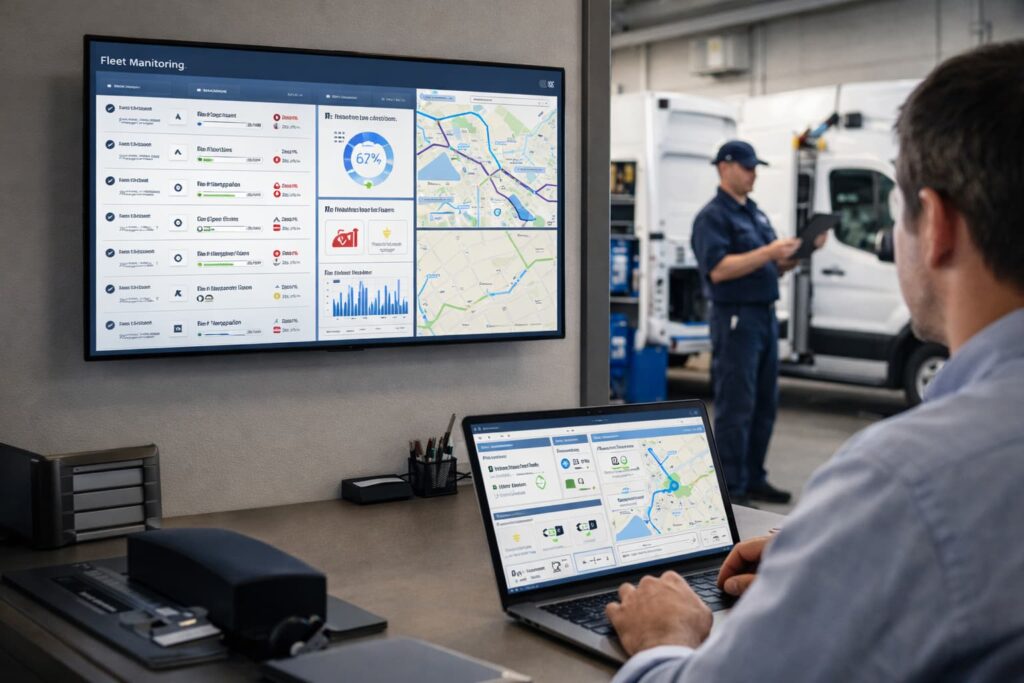
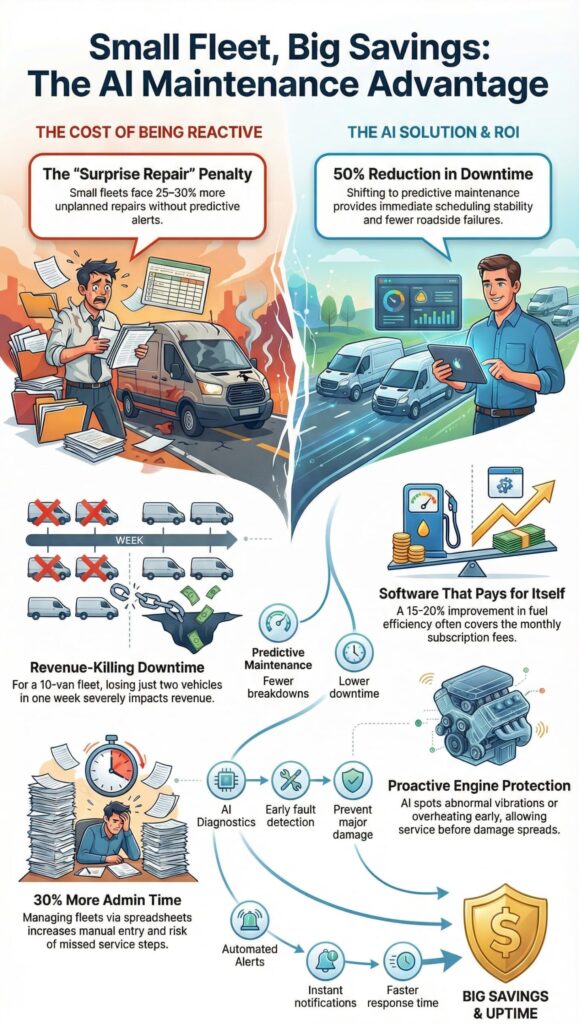
AI fleet maintenance software uses vehicle data to spot problems early, create work orders, and cut downtime. Small fleets often see 25 to 30 percent fewer surprise repairs and 30 to 40 percent lower repair costs when they use predictive alerts and live tracking.
These systems pull data from GPS units, engine modules, and onboard sensors. They track mileage, engine hours, fault codes, fuel use, and driver behavior. When something looks off, the system sends an alert before a breakdown happens.
Platforms like WiDrive combine OBD-II telematics with predictive analytics to monitor engine codes, fluid health, brake wear, and GPS in real time, then alert managers before issues become urgent and auto-schedule service at the yard.
Small fleets feel the impact fastest. If you run 10 vans, losing two in one week hurts revenue. AI shortens decision time and removes guesswork.
Core features often include:
- Predictive models that review thousands of data points
- Service reminders based on real use, not guesswork
- Live fleet monitoring through GPS
- Mobile apps for drivers and technicians
For small fleets, this replaces reactive repairs with planned maintenance that protects margins.
Which AI features actually reduce fleet downtime
The features that matter most are predictive failure alerts, anomaly detection, automated work orders, and real-time telematics.
Predictive systems study repair history, fuel use, idle time, and diagnostic codes. If the system detects overheating or abnormal vibration, it flags the issue early. Managers can schedule service before damage spreads.
Industry reporting supports this shift toward early intervention. One fleet analysis notes that,
“Predictive maintenance can increase vehicle availability by up to 20%.” – Fleetpoint
This improvement in uptime highlights how telematics-driven maintenance prevents breakdown chains before they start .
Automation is just as important. When a fault code appears, the software can create a work order, assign a technician, and log the repair. No manual entry. No missed steps.
Compliance tools also protect uptime. Expired inspections or missing reports can sideline a vehicle fast. Automated reminders keep paperwork current.
Feature impact snapshot
| AI Feature | Operational Impact | Small Fleet Benefit |
| Predictive maintenance | Fewer breakdowns | Lower downtime |
| AI diagnostics | Early fault detection | Prevent major damage |
| Automated alerts | Instant notifications | Faster response |
| Compliance tracking | Document reminders | Avoid penalties |
When telematics systems connect directly to maintenance workflows, fleets move from reactive repairs to planned uptime.
How much does AI fleet maintenance software cost
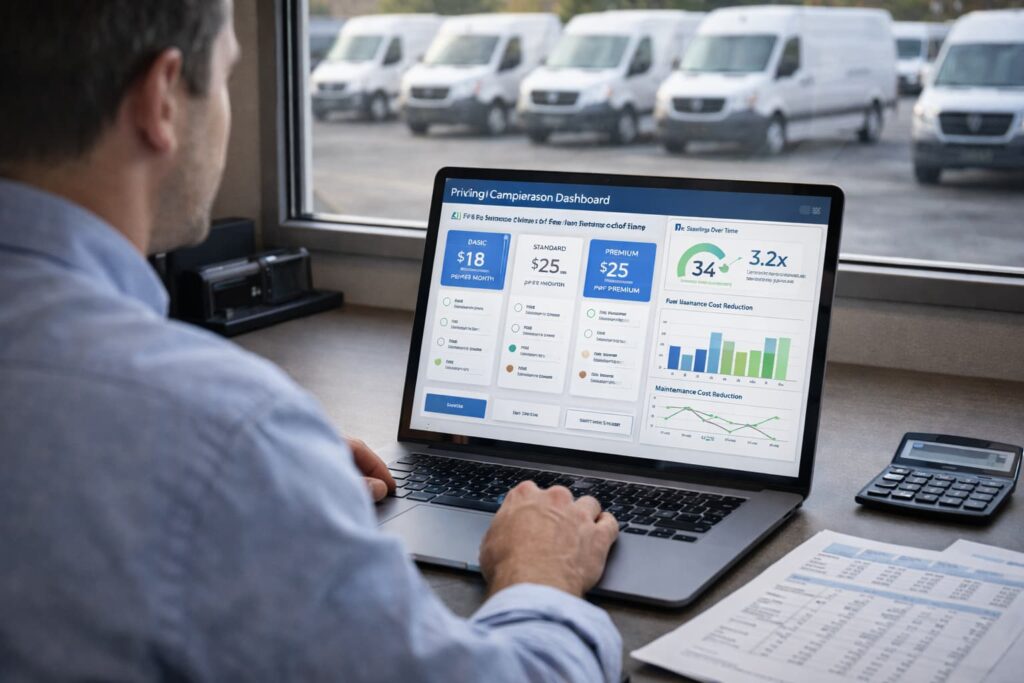
Most systems cost 5 to 20 dollars per vehicle per month. Entry plans can start around 3 to 4 dollars per vehicle for basic maintenance tracking.
Pricing usually follows a subscription model. Lower tiers focus on logs and work orders. Higher tiers add telematics hardware, engine diagnostics, and advanced reporting.
Common cost factors include:
- Monthly fee per vehicle
- GPS or telematics hardware
- Optional integrations with accounting or dispatch systems
Fuel savings often offset the cost. Government data shows that better maintenance and reduced idling lower fuel use. A 15 to 20 percent fuel improvement can cover subscription fees for many small fleets.
Cost comparison snapshot
| Tier | Monthly Cost per Vehicle | Best For |
| Basic cloud | 3 to 7 dollars | Simple maintenance logs |
| AI telematics | 10 to 20 dollars | Predictive alerts and tracking |
| Enterprise | 25 plus dollars | Large fleets |
Scalable pricing lets small fleets upgrade as they grow.
Real world benefits for small fleets
AI fleet tools can cut emergency repairs, improve uptime, simplify compliance, and extend vehicle life.
Research into logistics fleets shows measurable operational impact. One study reports that,
“Predictive maintenance reduces fleet downtime by 50%.” – ResearchGate
This level of reduction explains why small fleets moving from reactive repairs to predictive alerts often see immediate scheduling stability and fewer roadside failures.
Dashboards show downtime, repair costs, and service history in one place. Expense tracking covers parts, labor, and warranties in real time.
Operational gains often include:
- Digital driver inspection reports in mobile apps
- Parts inventory tracking
- Billing integration with QuickBooks
- Utilization and performance reports
Industry case studies show that fleets moving off spreadsheets reduce admin time by around 30 percent. Setup usually takes days, not weeks.
Better tire care, route planning, and brake monitoring also reduce fuel burn and emissions. That saves money and supports sustainability goals.
Which AI fleet maintenance tools fit small businesses
The best tools balance price, predictive alerts, mobile access, and GPS integration without heavy setup.
When choosing a system, focus on:
- Mobile app ease of use
- Real-time repair alerts
- Engine data and diagnostics
- Affordable hardware
- Ability to scale from 5 vehicles upward
Many fleet managers describe the shift from spreadsheets to live dashboards as a turning point. Start with tracking. Add predictive maintenance next. Layer in compliance tools as you grow.
How to implement AI fleet maintenance
A clear rollout plan keeps adoption smooth.
- Install GPS or telematics hardware in each vehicle.
- Connect devices to your cloud software.
- Set up service rules and automated alerts.
- Train drivers on mobile inspections.
- Track fuel savings and repair trends.
Fleets often see 25 to 30 percent fewer unplanned repairs in the first year when data stays accurate.
Measure results closely:
- Repair cost changes
- Fuel efficiency trends
- Downtime hours
- Completed service records
Within days, managers gain visibility that once required manual reports and late-night paperwork.
Is AI fleet maintenance worth it for 5 to 50 vehicles

For most small fleets, yes. The software lowers repair costs, automates compliance checks, and scales without requiring a large IT team.
Strong fit:
- Delivery fleets with tight schedules
- Contractor vans in busy cities
- Mixed trucks and vans
- Growing fleets beyond 10 vehicles
Less suitable:
- One or two vehicle operations
- Fleets without telematics data
- Teams unwilling to use mobile tools
Most platforms scale from 5 to over 1,000 vehicles. Small fleets gain the same visibility once limited to large operations.
Start with tracking. Add predictive maintenance. Build toward full asset management. Save money. Reduce downtime. Keep every vehicle working.
Best AI Fleet Maintenance Software for Small Business: The Bottom Line
The best AI fleet maintenance software helps small fleets cut downtime by 25 to 30 percent and lower fuel costs by up to 20 percent. It replaces manual logs with smart alerts built on real-time vehicle data.
For fleets with 5 to 50 vehicles, a phased approach works best. Start with telematics and vehicle tracking. Add predictive maintenance to plan repairs before problems grow. Layer in mobile service tools and billing integration as your operation expands.
This approach keeps costs under control. It strengthens compliance. It supports growth without adding extra staff.
Small fleets can now access advanced tools without large budgets. The software is affordable. The insights are clear. The results show up in fewer breakdowns and more vehicles on the road.
Ready to improve uptime and cut waste? Schedule your Fleet Optimization Strategy Call and take the next step.
References
- https://www.fleetpoint.org/fleet-industry-news/news-by-date/predictive-fleet-maintenance-driving-down-costs-in-the-us/
- https://www.researchgate.net/publication/390285921_HOW_PREDICTIVE_MAINTENANCE_IN_LOGISTICS_FLEETS_IS_REDUCING_EQUIPMENT_DOWNTIME_AND_OPERATIONAL_LOSSES